
Torch down roofing is a flat or low-slope roofing system made from modified bitumen, a type of asphalt reinforced with polymers to make it more flexible and durable than traditional built-up roofing. If you have a flat section on your home or a low-pitched roof that keeps giving you trouble, this material is worth understanding. We install and repair torch down roofing regularly throughout the South Puget Sound area, and we get plenty of questions about it, so let’s walk through what it actually is and where it makes sense.
How Torch Down Roofing Works
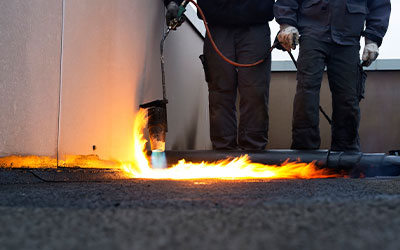
The name comes from the installation method. Roofing technicians use an open-flame propane torch to heat the underside of the modified bitumen membrane as it’s rolled out across the roof deck. The heat melts the bottom layer of asphalt, bonding it firmly to the surface below. Done correctly, this creates a tight, waterproof seal with no gaps or seams for water to sneak through.
Most torch down systems use two or three layers. The base layer provides structure and adhesion; the cap sheet on top is exposed to the elements and usually comes with a granule surface for UV protection. Some installations use a self-adhering base sheet and only torch the cap layer, which reduces open-flame exposure near the deck. Either way, the finished product is a continuous, watertight membrane that handles ponding water far better than shingles can.
Where It Makes the Most Sense
Torch down is specifically built for roofs with a pitch too low for asphalt shingles to shed water effectively. Standard composition shingles rely on slope to carry rain off quickly. On a flat or nearly flat surface, shingles can allow water to sit, work back under the laps, and cause leaks. Modified bitumen avoids that problem entirely because it’s a sealed membrane rather than overlapping pieces.
We see this system used most often on home additions, porch roofs, garage roofs, and sections where a flat roof meets a steeper main roof. Commercial properties use it widely, too. If you own a business or rental property in Kent, Auburn, or Renton with a flat roof, torch down is probably already there or should be.
For homeowners in Enumclaw, Maple Valley, Bonney Lake, and surrounding areas, the Pacific Northwest climate is actually a strong argument in favor of torch down on any flat section of your property. We get significant rainfall, and a properly installed modified bitumen system handles sustained moisture exposure well over its lifespan.
How Long Does It Last?
A well-installed torch down roof can last anywhere from fifteen to twenty years or more, depending on the product grade, the quality of the installation, and how well it’s maintained. Checking for blistering, pooling water, and debris buildup a couple of times a year goes a long way toward protecting your investment. We’re happy to walk you through what to look for if you’re not sure.
Like any roofing system, it benefits from occasional professional inspection, especially after a significant storm. If you’re in Renton, Kent, or anywhere else in our service area and you’re not sure how your flat roof held up after a rough stretch of weather, a quick inspection can save you from a much bigger repair down the road.
Is It Right for Your Home?
Torch down roofing is not the right answer for every roof. If your home has a steeper pitch and you’re considering a full replacement, composition shingles or cedar shake are typically better fits, both in performance and in curb appeal. But if you have a flat or low-slope section and you’re dealing with recurring leaks or an aging membrane, torch down is one of the most reliable solutions available.
The best way to figure out what your specific roof actually needs is to have someone look at it. We’ve been doing this since 1971, and we serve homeowners and property owners throughout Enumclaw, Maple Valley, Bonney Lake, Auburn, Kent, Renton, and surrounding areas. We’ll give you a straight answer about what system makes sense and why.
If you have questions about torch down roofing or want to talk through what’s going on with your roof, please give us a call or drop us an email. We’re glad to help.